Thoughts on .NET, architecture, engineering leadership, and the things I learn building complex systems.
Still running .NET Framework 4.x? It's not just old — it's a growing business risk. Here's an honest breakdown of what it actually costs to move to modern .NET, how long it takes, and how to do it without a scary big-bang rewrite.
Most developers get mediocre output from AI because they give it mediocre input. Here's my end-to-end workflow for planning, documenting, and building projects with Claude AI so every prompt returns accurate, production-ready code.
GPTBot, ClaudeBot, PerplexityBot they're all in your server logs. Most developers block them. The smarter move is to make them work for you...
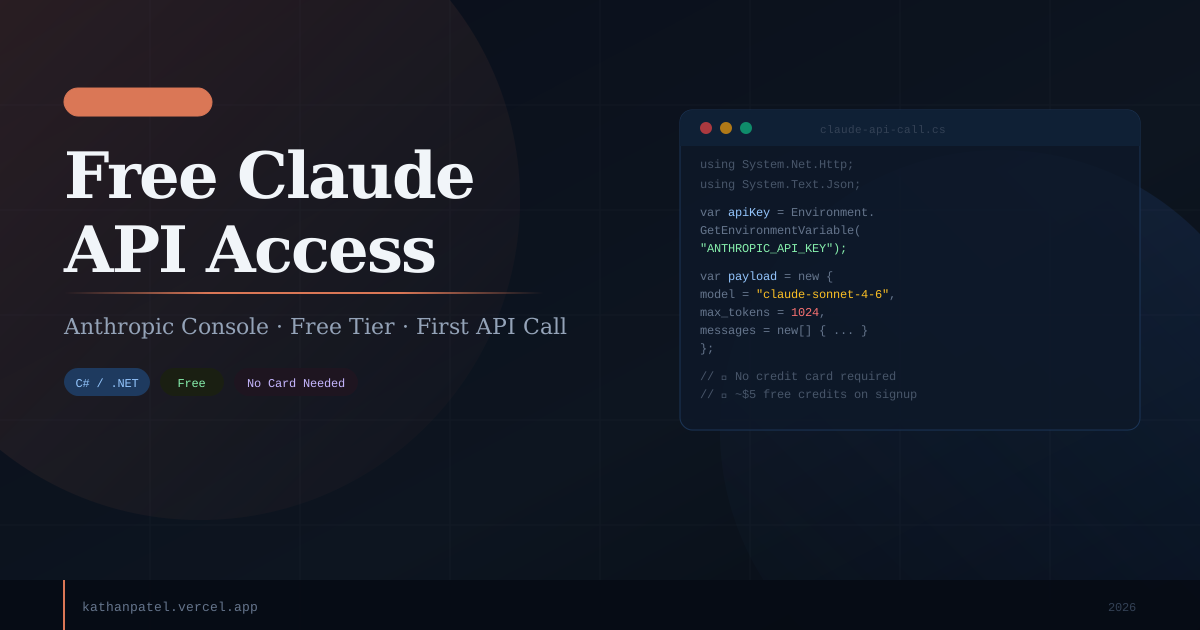
Anthropic doesn't offer a permanent free API tier but there are three legitimate paths to free Claude access depending on who you are and what you're building. This guide covers the ~$5 trial credits, the claude.ai free chat tier, and the Open Source program, with working C# code and honest limits.
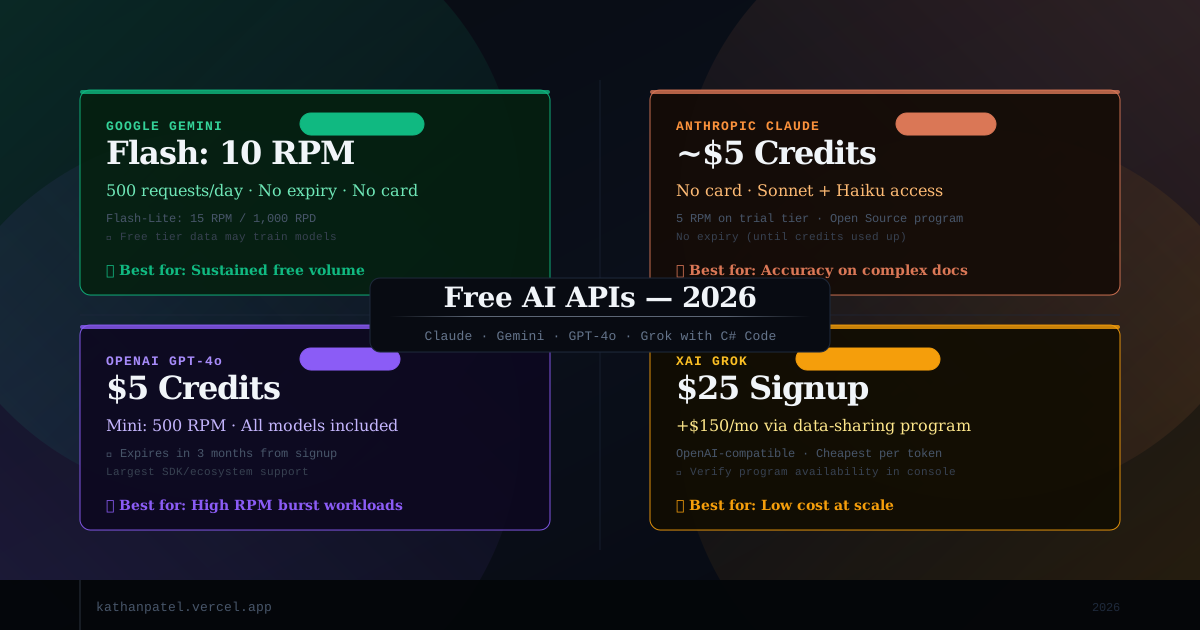
Google is the only provider with a truly permanent free API tier. Everyone else offers credits, trial windows, or conditional programs. Here's an honest breakdown of all four real limits, real C# code, and which one to actually start with depending on your use case.
I spent the better part of two years shipping document extraction pipelines with LeadTools before a client pushed me to evaluate GPT-4o. Running both on the same invoice set was humbling in some ways and reassuring in others. Here is what actually changed — and what did not.
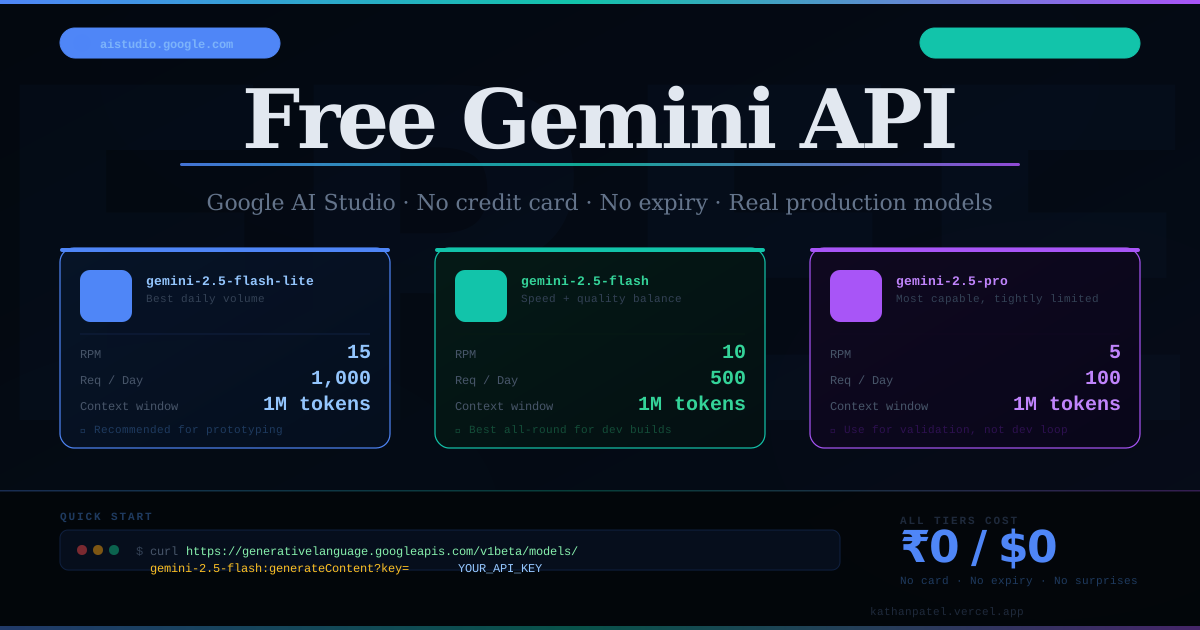
Most developers assume AI API access costs money from day one. It doesn't have to. Google's Gemini API offers a free tier through Google AI Studio with real model access, meaningful rate limits, and zero billing setup. Here's what you get, how to get it, and where it fits into your actual development workflow.
A cohort analysis matrix sounds simple it's just a grid. But keyboard navigation, live cell updates, row/column highlighting, and a buy/sell popup make it one of those UI components that exposes exactly where AI-assisted development hits its limits. Here's how I built it in WPF, and what happened when I asked AI to reproduce it.
I built Craftura Fine Furniture — a complete Next.js 14 e-commerce platform with admin panel, analytics, and B2B ordering using AI as my primary tool. Here's the honest account: what AI shipped fast, the four bugs it would have pushed to production, and why an experienced engineer is still the difference between a demo and a live store.
Law firms sit on mountains of unstructured data — contracts, call recordings, case notes, emails. AI can read all of it, extract what matters, and surface insights that would take a paralegal hours to compile. Here's how to build AI-powered legal features using Semantic Kernel and .NET.
Traditional OCR struggles with real-world documents — skewed scans, varied fonts, handwriting, inconsistent layouts. Learn how to use Azure OpenAI's vision API in a .NET app to extract accurate, structured data from any image with a single prompt — and why AI beats regex every time.
A deep dive into how we built a fully automated data sync pipeline for a law firm — connecting Clio, Lawmatics, Zoom, and Box using ASP.NET Core, Hangfire background jobs, and OAuth 2.0. Real architecture, real code, real problems solved.
Multi-tenancy is the foundation every SaaS sits on — get it wrong and you're facing data leaks and a rewrite. Here's how to build a scalable, secure multi-tenant platform with ABP.io and Blazor, using the patterns I apply on real client SaaS builds.
Ask three developers to quote the same project and you'll get three wildly different numbers. Here's an honest, itemised breakdown of what .NET software actually costs in 2026 — real ranges, where the money goes, and how to spot a fantasy quote.
WPF apps are powerful — but they need installing, updating by hand, and office-network access. Here's my step-by-step approach to migrating a WPF app to Blazor Server, screen by screen, without throwing away the business logic you've already paid for.